Toshifumi Suzuki, 7-Eleven Japan Founder and Father of the Modern Convenience Store, Dies at 93
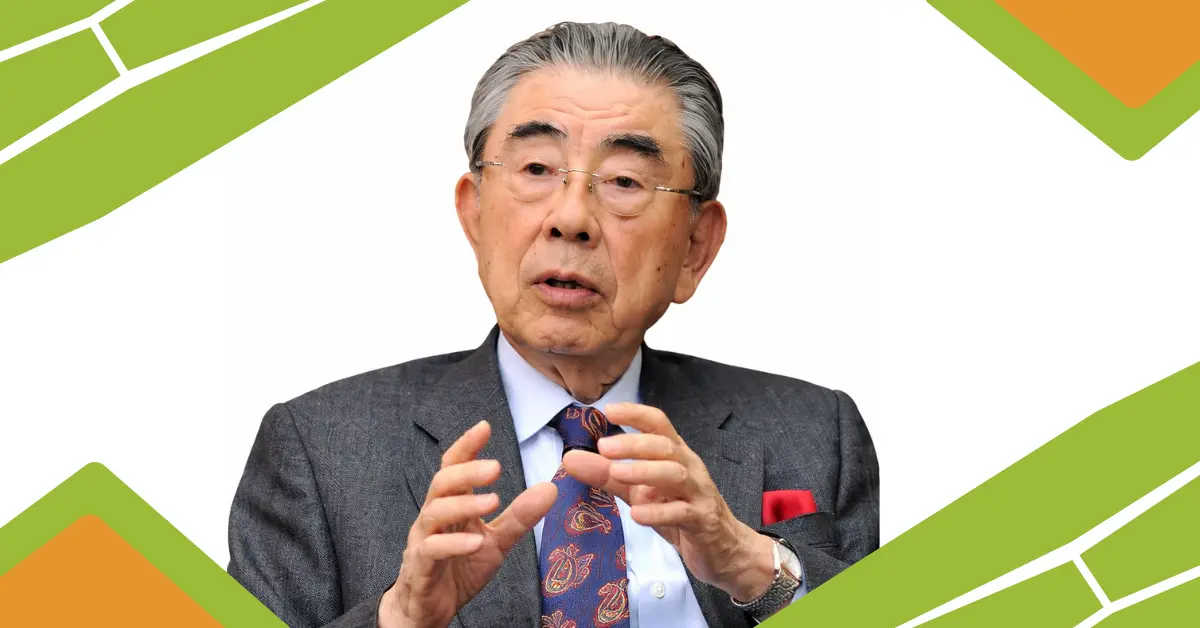
Toshifumi Suzuki, the visionary Japanese businessman widely credited with transforming the global convenience store industry and founding 7-Eleven Japan, passed away on May 18, 2026, at the age of 93. Seven & i Holdings, the parent company of the 7-Eleven empire, announced his death on May 25, 2026, attributing it to heart failure at his home in Tokyo.
Suzuki’s legacy as the pioneer of Japan’s “conbini” culture reshaped daily life for millions. He introduced data-driven retail, 24-hour operations, fresh meals, and comprehensive services that turned simple stores into essential community hubs. Under his leadership, 7-Eleven Japan grew from a single outlet into a dominant force that eventually acquired its U.S. parent company, creating a worldwide network exceeding 85,000 stores.
Early Life and Personal Background
Toshifumi Suzuki was born on December 1, 1932, in Sakaki-machi, Hanishina County, Nagano Prefecture, Japan-a rural area roughly 125 miles northwest of Tokyo. Growing up in post-World War II Japan amid economic recovery and limited infrastructure, he experienced firsthand the inconveniences of traditional shopping: short store hours, limited product variety, and reliance on small local outlets. These early frustrations later inspired his retail innovations.
Details about his immediate family remain relatively private, consistent with his low-profile personal style despite his immense business success. After completing high school in the rural setting, Suzuki moved to Tokyo for higher education. He graduated from Chuo University in 1956 with a degree in economics and commerce. During his university years, he was reportedly involved in student protests and served as a labor union leader, reflecting an early interest in societal and organizational dynamics.
Before entering the retail world, Suzuki worked at a book wholesaler and publishing sales company until 1963. This experience honed his understanding of distribution, logistics, and consumer demand-skills that proved foundational for his later career.
Information on his personal family life, including marriage and children, is not extensively publicized. He maintained a focus on professional endeavors throughout his life. In later years, reports noted he lived somewhat reclusively, cared for in his Tokyo home. His dedication to work often overshadowed personal disclosures, a common trait among Japanese business leaders of his generation.
Joining Ito-Yokado and the Birth of 7-Eleven Japan
In 1963, Suzuki joined Ito-Yokado Co., a growing supermarket chain founded by Masatoshi Ito. His sharp business acumen quickly stood out. During a visit to the United States, he observed Southland Corporation’s 7-Eleven stores and recognized their potential for Japan’s increasingly busy, urbanizing society.
Despite widespread skepticism-even from within his own company-Suzuki secured a licensing agreement with Southland in 1973. Japan’s first 7-Eleven store opened in 1974 in Toyosu, Tokyo, converted from a liquor store. It was an immediate success, reportedly doubling sales expectations on day one.
Suzuki became the first president of Seven-Eleven Japan (initially York-Seven) in 1978. He championed the franchise model, which was novel in Japanese retail at the time, and introduced revolutionary practices:
- Tanpin Kanri: A meticulous item-by-item inventory management system that used real-time sales data to stock only high-demand products, minimizing waste and maximizing turnover.
- Emphasis on fresh foods like rice balls (onigiri), bento boxes, and ready-to-eat meals tailored to Japanese tastes.
- 24-hour operations, which became a hallmark of conbini culture.
- Expansion of services: ATMs, bill payments, photocopying, ticket sales, and more, turning stores into “life infrastructure.”
By the early 1990s, 7-Eleven Japan’s profitability surpassed its parent Ito-Yokado. In a bold move, Suzuki led the bailout and eventual acquisition of the struggling U.S. Southland Corporation in 1991, reversing its fortunes and bringing it under Japanese management.
Building the Seven & i Holdings Empire
Suzuki’s leadership extended beyond convenience stores. He became president of Ito-Yokado in 1992 and later chairman and CEO of both Ito-Yokado and 7-Eleven Japan. In 2005, he orchestrated the formation of Seven & i Holdings, integrating supermarkets, department stores (like Sogo & Seibu), and financial services.
Under his guidance, the group achieved record sales exceeding 10 trillion yen, expanding globally. By the time of his death, 7-Eleven operated over 20,000 stores in Japan and tens of thousands more internationally. The stores proved vital during crises, such as the 2011 Great East Japan Earthquake, serving as distribution and support points.
Suzuki was known for his customer-centric philosophy: “The secret to success is to think from the customer’s perspective.” He invested heavily in information technology early on, creating integrated data systems that tracked sales, inventory, and consumer behavior in real time—predating many modern big data applications in retail.
Leadership Challenges and 2016 Resignation
In 2016, at age 83, Suzuki faced a significant boardroom dispute. As chairman and CEO of Seven & i Holdings, he attempted to remove then-President Ryuichi Isaka amid succession planning and pressures from activist investor Third Point LLC. The board rejected his proposal, leading to his resignation on April 7, 2016. He transitioned to the role of honorary adviser, which he held until his death.
His resignation letter was notable for its humility and sense of responsibility, earning praise even from international observers.
Legacy and Impact on Retail and Society
Toshifumi Suzuki’s innovations fundamentally changed Japanese consumer culture and influenced global retail. Conbini became synonymous with convenience, reliability, and social utility in a fast-paced society. His model emphasized freshness, efficiency, and adaptability—principles now standard in modern retail.
Estimates of his personal wealth varied, but his influence far exceeded financial metrics. He received numerous recognitions for his contributions to business and distribution systems. His approach to franchising empowered thousands of small business owners while maintaining rigorous operational standards.
Key Milestones in Toshifumi Suzuki’s Life and Career
| Year | Milestone |
|---|---|
| 1932 | Born in Nagano Prefecture, Japan |
| 1956 | Graduates from Chuo University |
| 1963 | Joins Ito-Yokado Co. |
| 1973-1974 | Secures 7-Eleven license; opens first Japanese store |
| 1978 | Becomes President of Seven-Eleven Japan |
| 1991 | Leads bailout of U.S. Southland Corp. |
| 1992 | Appointed President of Ito-Yokado |
| 2005 | Establishes Seven & i Holdings as Chairman & CEO |
| 2016 | Resigns from CEO/Chairman roles; becomes Honorary Adviser |
| 2026 | Dies on May 18 at age 93 from heart failure |
This table highlights the trajectory of a remarkable career spanning over five decades.
Tributes and Reactions
Following the announcement, tributes poured in from business leaders, retailers, and the public. Many hailed him as the “father of the conbini.” His passing comes shortly after the death of Masatoshi Ito in 2023, marking the end of an era for the Ito-Yokado group.
Suzuki’s vision extended beyond profit; he aimed to solve everyday inconveniences and create value in people’s lives. In interviews, he reflected on how rural shopping limitations inspired his urban solutions.
The Enduring Influence of Conbini Culture
Today, Japan’s convenience stores—numbering over 56,000 across chains—generate trillions in annual revenue and employ hundreds of thousands. They offer everything from hot meals and banking to disaster preparedness kits. Suzuki’s data analytics and supply chain efficiencies influenced retailers worldwide, from Southeast Asia to the Americas.
His story serves as a masterclass in spotting opportunity, embracing technology, and prioritizing customer needs. As e-commerce rises, the adaptability he instilled keeps physical conbini relevant.
Toshifumi Suzuki leaves behind a transformed retail landscape and a model that continues to evolve. While he stepped back from daily operations years ago, his foundational principles remain embedded in Seven & i Holdings’ operations.
Seven & i Holdings expressed deepest gratitude for the support shown to Suzuki during his lifetime. Funeral arrangements are expected to be announced privately, in line with Japanese customs for business figures.
Also Read: Kawaii Culture in Japan: Why Cute Aesthetics Dominate Fashion, Food & Society