Why Japanese People Value Silence in Public Spaces: Culture, Etiquette & Social Reasons
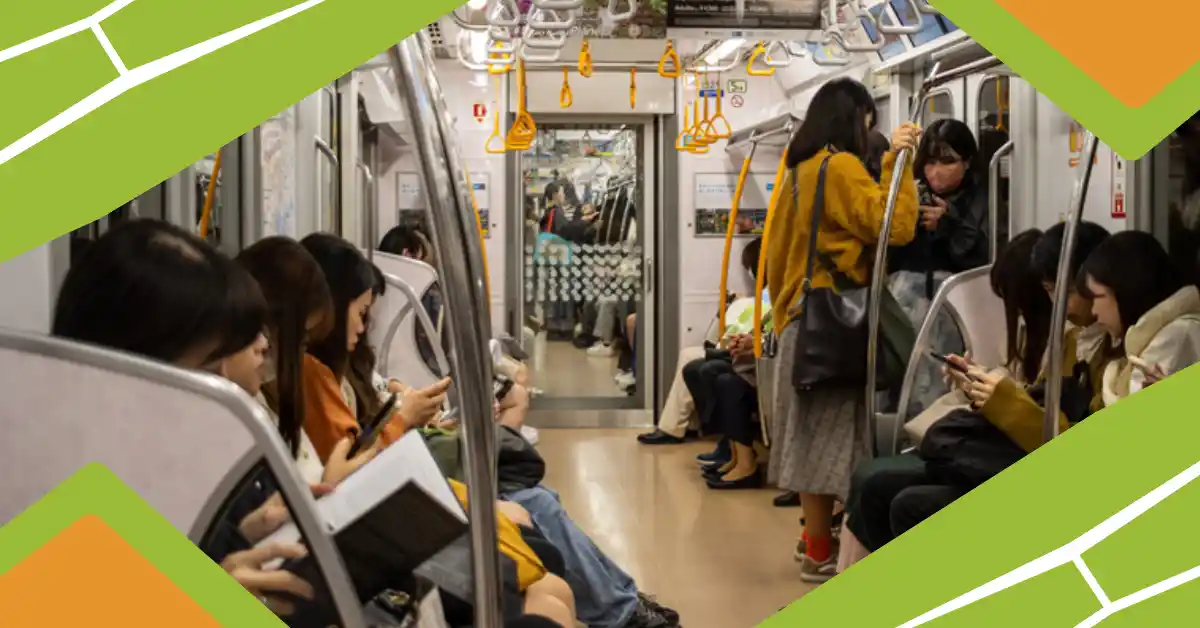
Silence in public spaces is deeply embedded in Japanese society, shaping how people behave on trains, streets, offices, and shared environments. Unlike many cultures where conversation or ambient noise is expected, Japan often treats quietness as a form of respect, mindfulness, and social awareness. This cultural preference is not accidental; it is the result of historical values, education systems, urban density, and collective social expectations that prioritize harmony over individual expression in shared environments.
Understanding why Japanese people value quiet environments offers insight into broader cultural principles such as “wa” (harmony), respect for others, and emotional restraint. It also helps explain everyday behaviors that visitors may find surprising, such as the near silence of crowded train cars or the widespread use of silent phone modes in public transport.
Cultural Foundations: Harmony and Collective Awareness
One of the most important reasons for Japan’s preference for quiet environments lies in the cultural concept of harmony, known as “wa.” In Japanese society, maintaining group harmony is often considered more important than expressing individual preferences. This does not mean individuality is suppressed, but rather that it is expressed in ways that do not disturb others.
In this context, noise is often viewed as a potential disruption to social balance. Speaking loudly in shared environments may be interpreted as inconsiderate, not because sound itself is inherently negative, but because it imposes on others’ comfort and mental space.
Historical influences also play a role. Traditional Japanese living spaces, such as tatami rooms with thin walls and sliding doors, naturally encouraged softer speech and mindful movement. Over time, these habits evolved into broader social norms that extended beyond the home and into public life.
Education further reinforces this mindset. From early schooling, children are taught group discipline, listening quietly, and being aware of others in shared spaces. This creates a strong behavioral foundation that continues into adulthood.
At a psychological level, silence is associated with respect. Choosing not to disturb others is seen as a form of consideration. This is one reason why silence in public spaces is not enforced by strict rules alone but maintained through shared social understanding.
Etiquette in Daily Life: Trains, Streets, and Shared Environments
Public etiquette in Japan is one of the most visible expressions of its cultural values. Nowhere is this more evident than on public transportation. Commuter trains in cities like Tokyo and Osaka are often crowded, yet remarkably quiet. Conversations are usually kept to a minimum, and phone calls are discouraged.
Instead of rules alone enforcing this behavior, social awareness plays a key role. Many train announcements gently remind passengers to keep phones on silent mode and to avoid loud conversations. However, compliance is high because people generally understand the expectation without needing enforcement.
On trains and buses, several common behaviors illustrate this etiquette:
- Phone calls are avoided, and messages are preferred
- Conversations are kept at low volume or paused entirely
- Music is listened to through headphones with minimal leakage
- Priority is given to allowing others a calm, undisturbed commute
These habits are not limited to transportation. In public streets, parks, and even restaurants, there is often a noticeable sense of restraint in volume levels. While social gatherings and entertainment spaces can be lively, shared everyday environments are treated differently.
This creates a unique balance in Japanese urban life: cities are among the busiest in the world, yet many public spaces feel calm and orderly. This balance reinforces the cultural importance of maintaining awareness of others in close proximity.
Social Psychology and Modern Urban Life
The preference for quiet environments is also closely tied to social psychology and the realities of modern urban living. Japan’s major cities are densely populated, meaning people are constantly sharing limited space. In such environments, reducing unnecessary noise becomes a practical way to reduce stress and maintain personal comfort.
Psychologically, silence can function as a buffer. In crowded trains or busy stations, minimizing sound helps individuals maintain a sense of personal space even when physical space is limited. This is especially important in cities like Tokyo, where millions of people commute daily.
Another factor is the cultural value placed on self-control. Emotional restraint is often associated with maturity and responsibility. Speaking loudly or behaving disruptively in public may be seen as lacking awareness of one’s surroundings. As a result, people naturally adjust their behavior to align with group expectations.
Interestingly, this does not mean Japanese society lacks communication or expressiveness. Instead, expression is often context-dependent. In private settings, among friends or family, conversations can be lively and emotionally rich. The distinction lies in the setting rather than the absence of expression itself.
Modern technology has also reinforced these habits. The widespread use of smartphones has shifted communication toward text-based interaction in public environments. This supports the cultural preference for reducing audible disruption.
Over time, these combined influences have strengthened the expectation that shared spaces should remain calm. As a result, silence in public spaces has become a form of unspoken agreement rather than a formal rule.
Conclusion: A Cultural Language of Respect
Japan’s preference for quiet public environments is not simply about noise control, it reflects a deeper cultural philosophy rooted in harmony, respect, and social awareness. From historical living conditions to modern urban design, multiple factors have shaped the way people behave in shared spaces.
At its core, this cultural approach emphasizes consideration for others. By minimizing disruption, individuals contribute to a collective sense of order and comfort. This is why silence in public spaces is often perceived not as absence of communication, but as a meaningful form of social communication in itself.
For visitors, understanding this cultural norm can significantly enhance the experience of traveling in Japan. It provides insight into how millions of people coexist smoothly in densely populated cities while maintaining a sense of calm. More importantly, it highlights how cultural values can shape even the simplest everyday behaviors, turning silence into a shared expression of respect and harmony.