Sacred Sites of the Kii Mountains: Discover Japan’s Spiritual Mountains, Temples, and Pilgrimage Paths
The Kii mountains of Japan are a sacred heartland where nature and spirituality merge into one of the country’s most profound cultural landscapes. Stretching across the Kii Peninsula, this ancient mountain range has been revered for over a thousand years as a place where gods, monks, and pilgrims walk the same forested paths. Recognized today as a UNESCO World Heritage Site, the region offers a rare glimpse into Japan’s living spiritual traditions, where pilgrimage routes, shrine complexes, and temple towns continue to welcome seekers from around the world.
Unlike typical travel destinations, the Kii region is not defined by a single landmark. Instead, it is a network of sacred sites connected by dense forests, mist-covered peaks, and timeworn stone paths. Walking here is less about sightseeing and more about experiencing a journey that blends nature, mythology, and personal reflection.
The Spiritual Legacy of the Kii Mountains
The spiritual significance of the region dates back to the introduction of Buddhism and the evolution of Shinto beliefs in Japan. Over centuries, ascetics known as yamabushi trained in these remote peaks, believing that enlightenment could be reached through communion with nature. The dense cedar forests, roaring waterfalls, and remote valleys became natural temples.
The Kii mountains have long been associated with the sacred Kumano Sanzan shrines Kumano Hongu Taisha, Kumano Nachi Taisha, and Kumano Hayatama Taisha. These shrines form the spiritual core of the region and are believed to be inhabited by divine spirits. Pilgrims from all walks of life once traveled great distances to reach them, seeking healing, renewal, or divine favor.
What makes the area especially unique is its blending of Shinto and Buddhist traditions, a characteristic known as shinbutsu-shūgō. This fusion created a spiritual ecosystem where shrines and temples coexist harmoniously, reflecting Japan’s deeply interconnected worldview of nature and divinity.
Kumano Kodo: Japan’s Ancient Pilgrimage Network
One of the most remarkable features of the region is the Kumano Kodo, an ancient pilgrimage route system that winds through the mountains. This network of trails connects sacred shrines and temples, and it is one of only two pilgrimage routes in the world designated as a UNESCO World Heritage Site, alongside Spain’s Camino de Santiago.
Walking the Kumano Kodo is not simply a hike; it is a spiritual journey that mirrors the experiences of emperors and commoners who traveled these paths centuries ago. The routes pass through towering cedar forests, stone stairways, and remote mountain villages where time seems to stand still.
Along the way, pilgrims encounter small roadside shrines, moss-covered statues, and tea houses that once served travelers seeking rest. The atmosphere is quiet and introspective, encouraging walkers to slow down and reflect.
Within the broader Kii mountains landscape, the Kumano Kodo remains the most iconic pilgrimage experience. Many modern travelers complete sections of the trail over several days, staying in traditional inns known as minshuku, where local hospitality adds to the cultural immersion.
Sacred Sites and Natural Wonders Along the Journey
Beyond the pilgrimage routes, the region is home to numerous sacred and natural landmarks that define its spiritual identity. Among the most notable are:
Kumano Nachi Taisha and Nachi Falls
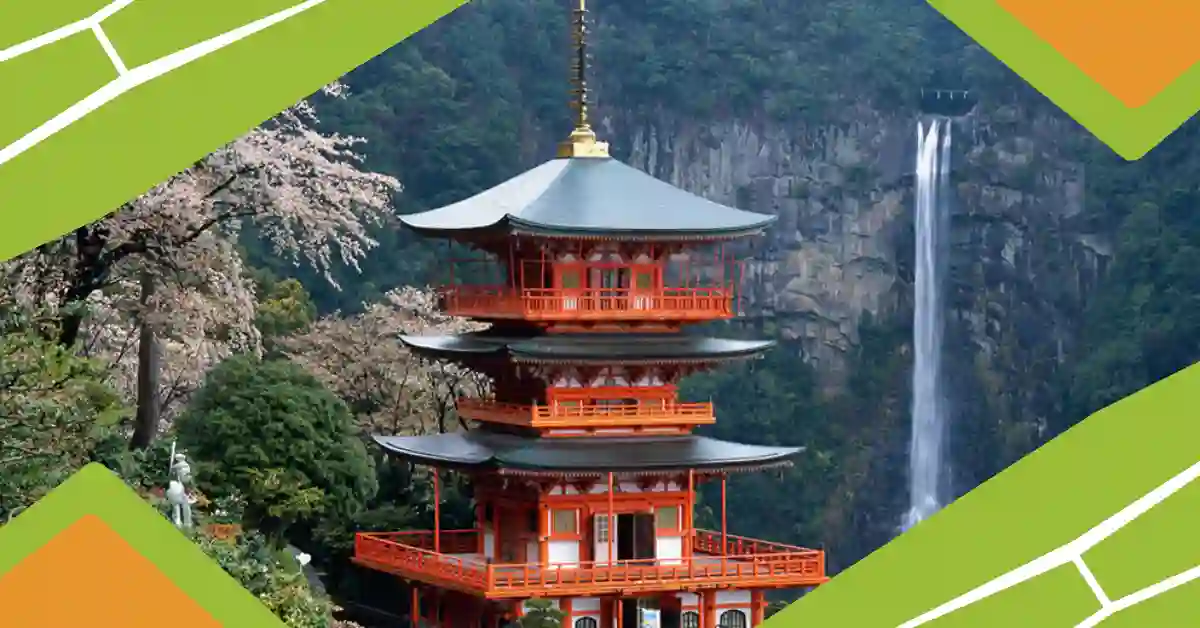
Kumano Nachi Taisha is one of the most important shrines in the region and is dramatically set against the backdrop of Nachi Falls, Japan’s tallest single-drop waterfall. The sight of the red shrine buildings framed by cascading water and dense forest creates one of the most iconic spiritual landscapes in the country.
Kumano Hongu Taisha and Oyunohara
Kumano Hongu Taisha, once located at the riverside site of Oyunohara, is another central pilgrimage destination. The massive torii gate marking the entrance to Oyunohara is one of the largest in Japan and symbolizes the transition from the secular world to the sacred realm.
Seiganto-ji Temple
Located near Nachi Taisha, Seiganto-ji Temple is a striking example of Buddhist presence in the region. Its five-story pagoda, framed by forest and waterfall, reflects the harmonious coexistence of Buddhism and Shinto beliefs in the Kii mountains.
Together, these sacred places form a spiritual network that is deeply embedded in Japan’s cultural identity. Pilgrims often describe the experience as transformative, not because of a single destination, but because of the journey itself.
Nature, Mythology, and the Living Landscape
One of the most powerful aspects of the region is how nature itself is treated as sacred. Mountains are seen as dwellings of gods, rivers as purifying forces, and forests as living temples. This worldview is not symbolic; it is actively practiced in rituals, festivals, and daily life.
The dense cedar forests of the Kii mountains are especially significant. Some trees are believed to be hundreds of years old, standing as silent witnesses to centuries of pilgrimage. Walking through these forests often feels like stepping into another dimension, where natural sounds replace modern noise and time feels suspended.
Local mythology also plays a central role. Stories of deities descending into waterfalls, monks attaining enlightenment in caves, and spirits guiding lost travelers are deeply woven into the cultural fabric of the region. These narratives continue to shape how visitors interpret the landscape today.
Pilgrimage Experience in Modern Times
While the Kumano Kodo was once traveled by emperors and ascetics, it has now become accessible to global travelers seeking meaningful experiences. However, the essence of pilgrimage remains intact. Many visitors choose to walk sections of the route rather than rushing through it, allowing time for reflection and connection with nature.
Travelers often report that the experience is physically challenging but emotionally rewarding. The combination of steep climbs, long forest trails, and serene shrines creates a rhythm that encourages mindfulness. Unlike conventional tourism, the journey is as important as the destination.
The Kii mountains continue to serve as a bridge between ancient tradition and modern exploration. Infrastructure has been carefully developed to support visitors without disrupting the sacred atmosphere. This balance ensures that the spiritual integrity of the region remains preserved.
Cultural Traditions and Local Life
The communities surrounding the pilgrimage routes maintain traditions that have been passed down for generations. Festivals celebrating local deities, seasonal rituals, and shrine ceremonies are still actively practiced.
Local cuisine also reflects the region’s spiritual and natural environment. Meals often include mountain vegetables, freshwater fish, and simple dishes that align with Buddhist principles of mindfulness and simplicity. Staying in traditional inns allows visitors to experience this lifestyle firsthand.
In many ways, daily life in the region continues to be influenced by the spiritual rhythm of the Kii mountains, where nature and tradition remain inseparable.
Why the Kii Mountains Remain a Global Spiritual Destination
What makes this region truly special is its ability to preserve ancient spiritual traditions while remaining relevant in the modern world. Few places on Earth offer such a seamless blend of natural beauty, religious heritage, and cultural continuity.
For travelers seeking more than just scenic landscapes, the Kumano region provides a rare opportunity to engage with a living spiritual tradition. Whether walking the Kumano Kodo, visiting ancient shrines, or simply standing beneath towering cedar trees, visitors often leave with a deeper sense of connection and reflection.
The enduring appeal of the Kii mountains lies not only in their beauty but in their meaning. They are not just mountains; they are a spiritual journey, a cultural archive, and a living expression of Japan’s sacred geography.
Conclusion: A Journey Beyond Time
Exploring the sacred sites of the Kii region is ultimately an exploration of both landscape and self. The mountains, shrines, and pilgrimage paths form a unified spiritual system that has endured for centuries. In a world defined by speed and distraction, this region offers something increasingly rare: stillness, meaning, and continuity.
To walk these ancient paths is to step into a tradition that continues to breathe through forest, stone, and ritual. And for many, that journey becomes far more than travel it becomes transformation.
Also Read: Explore Tokyo, Kyoto & Mount Fuji: Ultimate Japan Travel Spots Guide