A Complete Guide to Doing Laundry in Japan: Everything You Need to Know (2026)
Whether you’re planning a short trip or preparing for long-term life in Japan, knowing how to do laundry is one of those practical tasks that can make everyday life much smoother. Japan’s laundry culture combines thoughtful convenience with a few quirks from compact apartment washing machines to self-service coin laundries found on nearly every city block. This guide explains everything you need to know to clean and care for your clothes efficiently and with confidence during your stay.
Understanding Laundry in Japan
Many travelers underestimate how often they’ll need to wash clothes in Japan. With hot, humid summers and significant temperature changes between indoor air conditioning and outdoor heat, people often change clothes daily or even multiple times a day. Being prepared to do laundry efficiently allows you to pack lighter, stay fresh, and avoid unnecessary expenses on disposable clothing.
Laundry habits in Japan differ slightly from what many Westerners expect. Homes may have limited space, machines may operate differently, and there’s a strong culture of self-service in both apartments and public laundromats.
Laundry Machines in Homes and Stays
If your accommodation includes a washing machine, you’re in luck. These machines are often neatly integrated into bathrooms or small utility areas and handle everyday loads without fuss.
Unlike many Western front-loading machines, Japanese washing machines usually load from the top and are designed for cold water washes, which are gentler on clothes and energy-efficient. Detergent formulated for cold water washing is widely available at convenience stores, supermarkets, and grocery stores throughout Japan.
Operating these machines is straightforward. You put your clothes into the drum, add detergent and optional fabric softener into the designated compartments, turn on the power button, and start the default or “standard” cycle. The machine usually shows how much detergent will be used, water volume, and estimated time remaining once started.
Many home machines do not include a drying function. In these cases, clothes are typically hung to dry on a balcony or indoors above a bathtub, especially on rainy days, with bathroom ventilation helping the drying process. High-end models that combine hot water washing and integrated drying exist but are uncommon outside luxury accommodations.
Coin Laundries: Convenient and Everywhere
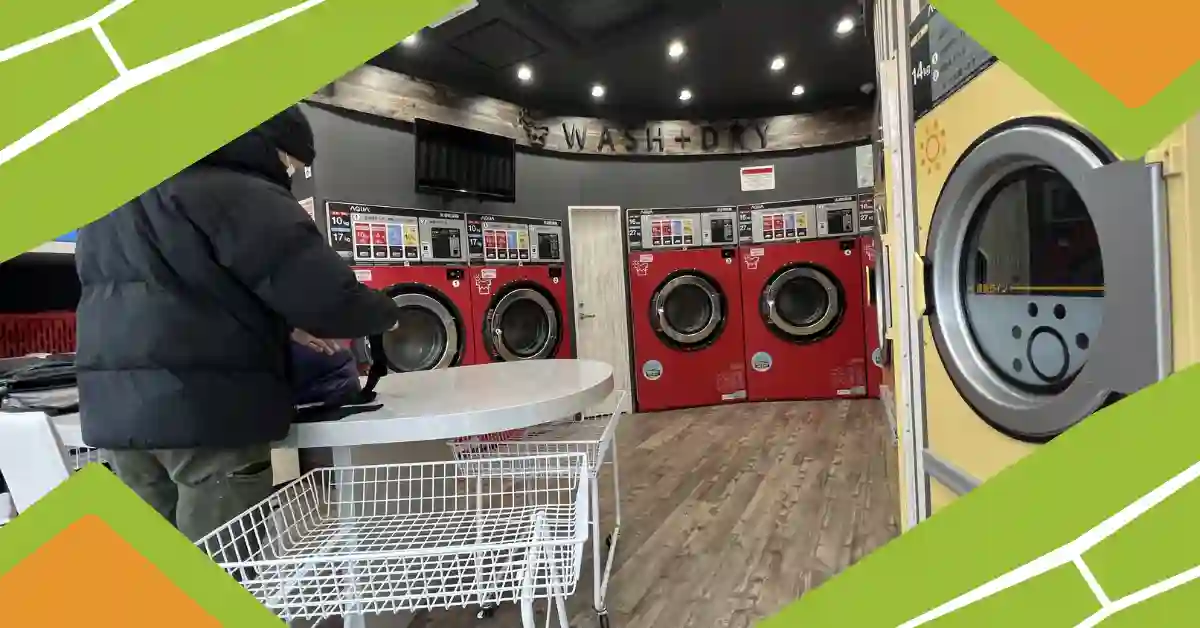
For those staying in places without a laundry machine, or anyone needing to wash bulky items like blankets or futons, coin laundries are the next best option. These self-service laundromats are widespread in cities, residential districts, and near public transit stations.
Coin laundries in Japan are known for being clean, safe, and user-friendly. Many operate 24 hours a day, allowing residents and visitors to wash clothes at their convenience. Machines may be large enough to handle heavy loads, and some even combine washing and drying functions in one unit.
When using a coin laundry, you’ll need mainly ¥100 coins, as most machines accept only these. Popular laundromats often display the price per load on the machine and may accept smart transit cards or QR payments in urban areas.
Some coin laundry machines include detergent and fabric softener automatically, but others require you to supply your own. If a machine does not provide detergent, small packets can usually be purchased from vending machines at the laundromat or from nearby convenience stores.
Coin laundries also have dryers, typically separate units, where you insert coins to run drying cycles. Japanese dryers may run slower or be less powerful than what visitors are used to, so you may need to allow more time to fully dry large loads.
Dry Cleaning Services
For delicate items, business wear, or garments that need special care, dry cleaning services are a popular choice. Locally referred to as cleaning shops, these businesses offer drop-off and pick-up services. Dry cleaning in Japan tends to be affordable, and many shops remain open late into the evening.
Dry cleaners provide specialized cleaning for items like suits, dresses, coats, and sweaters at fixed prices. These services are conveniently located in residential and urban areas, making them a practical solution for clothes that require professional treatment.
Practical Tips for Laundry in Japan
Packing Smart: Knowing about local laundry options allows you to pack fewer clothes and wash regularly. This is especially helpful on longer trips or during humid months when clothes can get sweaty quickly.
Budgeting for Laundry: Coin laundries are generally affordable, with washing cycles costing a few hundred yen and drying charged per 10 to 15-minute increments. Carrying enough ¥100 coins will save you time and effort.
Detergent Options: While some coin laundry machines provide detergent, others do not. Convenience stores, supermarkets, and drugstores sell a wide range of detergents, from liquid to powder, that work well in cold water washes.
Weather and Drying: Japan experiences a rainy season and high humidity during parts of the year, so drying clothes outdoors may not always be ideal. Indoor drying racks, bathroom ventilation setups, and coin laundry dryers become especially helpful during such times.
Machine Labels and Language: Many machines display controls in Japanese. Basic phrases like standard wash, rinse, and spin cycles are usually indicated on panels. Using a simple translator or translation app can help you understand unfamiliar labels.
Why Japanese Laundry Options Work Well
Japan’s laundry infrastructure reflects a culture that values cleanliness and convenience. Self-service coin laundries offer flexibility without the need for appointments or staff assistance, and home machines are typically well-maintained and easy to operate once you understand the basics.
Laundry in Japan is accessible to both locals and visitors, regardless of where you stay. High population density and limited residential space have made coin laundromats an everyday part of life for many people.
Final Thoughts
Laundry might sound mundane, but understanding how it works in Japan can save you time, money, and stress. From mastering your apartment washing machine to confidently navigating a coin laundry, you gain independence over your daily routines.
By learning these simple principles how machines work, where to find services, and how to pay you’ll be well-equipped to manage your laundry needs in Japan without confusion or hesitation. Whether handling rainy season challenges, washing bulky bedding, or keeping your travel clothes fresh, Japan’s laundry system is efficient, reliable, and surprisingly convenient.
Also Read: Living in a Japanese Apartment: Harmony, Etiquette, and Daily Life