The Incredible Story of Hiroshi Hase: From Olympic Mat to Governor’s Office
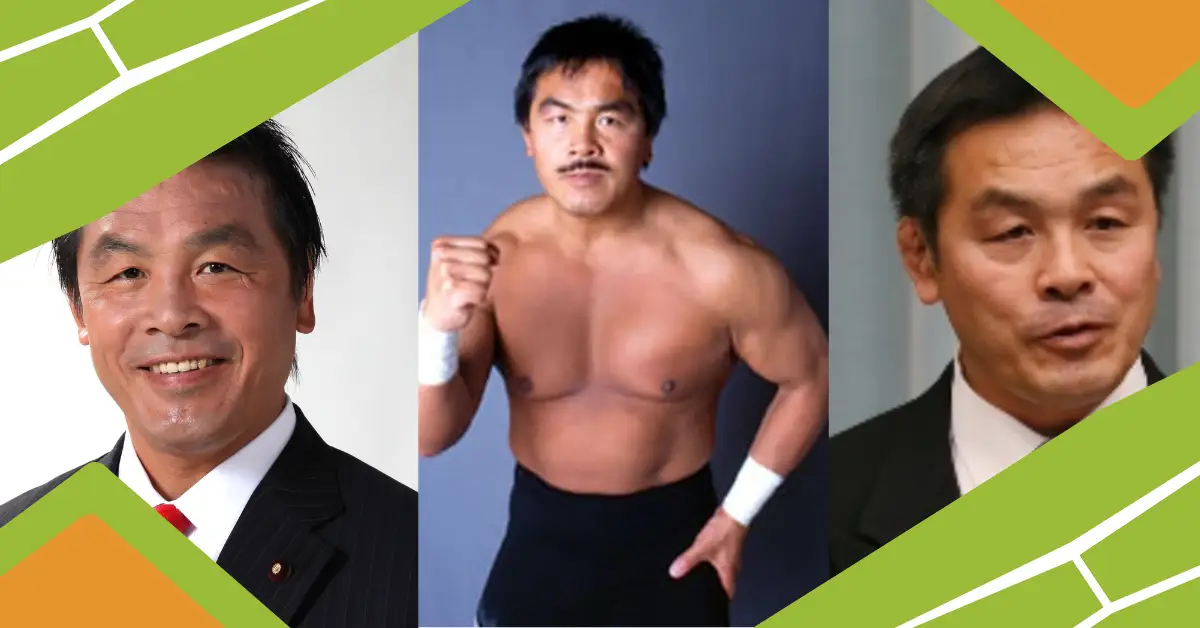
Hiroshi Hase, the iconic Japanese figure who transitioned seamlessly from the wrestling ring to the halls of political power, has long been a symbol of perseverance, resilience, and leadership. His journey, from representing Japan in the 1984 Olympics to navigating national politics and eventually serving as the governor of Ishikawa Prefecture, reflects a life dedicated to excellence, service, and public impact. Yet, in a dramatic turn of events, Hase recently faced a stunning electoral defeat that marked the end of a notable chapter in Japanese politics.
Early Life and Olympic Dreams
Born on May 5, 1961, in Oyabe, Toyama Prefecture, Hiroshi Hase grew up in a region that prized discipline and hard work. His formative years were shaped by rigorous training at Senshu University, where he excelled in Greco-Roman wrestling. Hase’s dedication culminated in representing Japan at the 1984 Los Angeles Olympics, a defining moment that etched his name into the nation’s athletic memory.
Competing on the Olympic stage was not merely about sport for Hase, it was about forging a persona grounded in determination, courage, and integrity. This foundation would serve him well in both his wrestling and political careers, signaling early on his capacity to inspire and lead.
Pro Wrestling Stardom and International Recognition
In 1986, Hase transitioned from amateur wrestling to professional wrestling, debuting on February 28 after rigorous training under legends like Riki Choshu and Stu Hart. His entrance into the worlds of New Japan Pro-Wrestling (NJPW) and All Japan Pro-Wrestling (AJPW) marked the beginning of an illustrious career. Hase captivated fans with his technical prowess and athleticism, earning multiple titles, including two IWGP Junior Heavyweight Championships and two IWGP Tag Team Championships.
Beyond championship belts, Hase’s influence extended to leadership roles, eventually becoming chairman of the Pacific Wrestling Federation (PWF). His wrestling career not only showcased his physical strength but also his ability to command respect and guide others, skills that seamlessly translated into his political endeavors.
Transition to Politics, A Wrestler in the Diet
In 1995, Hiroshi Hase made a bold move from the wrestling ring to the political arena, winning a seat in Japan’s House of Councillors as an independent from Ishikawa Prefecture. This transition made him only the second professional wrestler to enter Japan’s national legislature, following the trail blazed by Antonio Inoki.
By 2000, Hase had secured a seat in the House of Representatives representing Ishikawa’s 1st district. Over more than two decades, he became a prominent figure within the Liberal Democratic Party (LDP), advocating for education, welfare, sports, and even early measures supporting LGBT rights in anticipation of the 2020 Tokyo Olympics. His dedication to international child rights, particularly in enforcing Hague Convention compliance for visitation, highlighted his principled approach to governance, mirroring the sense of justice he exhibited in wrestling.
Ministerial Leadership and National Influence
Hase’s political career reached new heights when he served as Senior Vice Minister of Education, Culture, Sports, Science and Technology (MEXT) from 2005 to 2006. In 2015, under Prime Minister Shinzo Abe, he assumed the role of full Minister, tasked with resolving crises related to Tokyo 2020 Olympic stadium construction. Hase approached these challenges with the same tenacity that characterized his wrestling days, championing reforms and advocating policies that uplifted Japan’s youth, culture, and sporting institutions.
His tenure as minister demonstrated that athletic discipline could effectively inform political leadership, blending strategic thinking with a relentless commitment to public service.
Governorship, Steering Ishikawa Through Crisis
In March 2022, Hase left national politics to win the governorship of Ishikawa Prefecture, succeeding Masanori Tanimoto. His tenure quickly faced one of the most significant challenges of his career, the 2024 Noto Peninsula earthquake, which devastated communities across the region.
Governor Hase emerged as a decisive leader during the disaster recovery, coordinating reconstruction efforts with national authorities and earning praise from international partners, including India’s envoy, for the care extended to affected foreign nationals. Under his guidance, Ishikawa began to recover not just physically but emotionally, with Hase’s leadership symbolizing hope and resilience in the face of adversity.
A Stunning Electoral Defeat in 2026
Despite his proactive governance, Hiroshi Hase faced a dramatic setback on March 8, 2026, when his bid for re-election was unsuccessful. The defeat, caused by a “conservative split” that fragmented the LDP-aligned vote, allowed Yukiyoshi Yamano, former mayor of Kanazawa, to claim the governorship. Hase’s campaign, which emphasized earthquake recovery and sustainable development, was ultimately unable to withstand political fragmentation.
For supporters, the loss was akin to a wrestler’s final pinfall, sudden, difficult to accept, and laden with what-ifs. Nonetheless, the conclusion of Hase’s governorship does not erase the impact of his leadership, nor does it diminish the inspiration drawn from his career spanning sports, politics, and public service.
Legacy, Bridging Sports and Governance
Hiroshi Hase’s remarkable journey, from Olympic wrestler to minister and governor, represents a rare blend of athletic heroism and public service. His life illustrates that the qualities cultivated in sports discipline, courage, and resilience can profoundly influence political leadership and civic responsibility.
Internationally, Hase remains revered among wrestling fans and political observers alike. His response to crises, innovative policy work, and dedication to community welfare serve as a blueprint for leaders seeking to integrate diverse experiences into governance. While the political ring may have concluded for Hase, his story continues to inspire, proving that true champions persist through challenges, setbacks, and change.
Conclusion
Hiroshi Hase’s life is a testament to the power of persistence, adaptability, and leadership. From the mats of the Olympics to the heights of Japan’s political arena, he consistently demonstrated courage, integrity, and vision. Though his governorship ended in an unexpected defeat, his influence and legacy remain strong, reflecting a life lived with purpose and determination. Hase’s journey reinforces the idea that success is not measured solely by victories but by the resilience, impact, and inspiration one leaves behind.
In an era where heroes are often confined to a single domain, Hiroshi Hase stands as a reminder that boundaries can be crossed, challenges embraced, and legacies forged, inside and outside the ring.